
The Chatbot Paradox in Healthcare

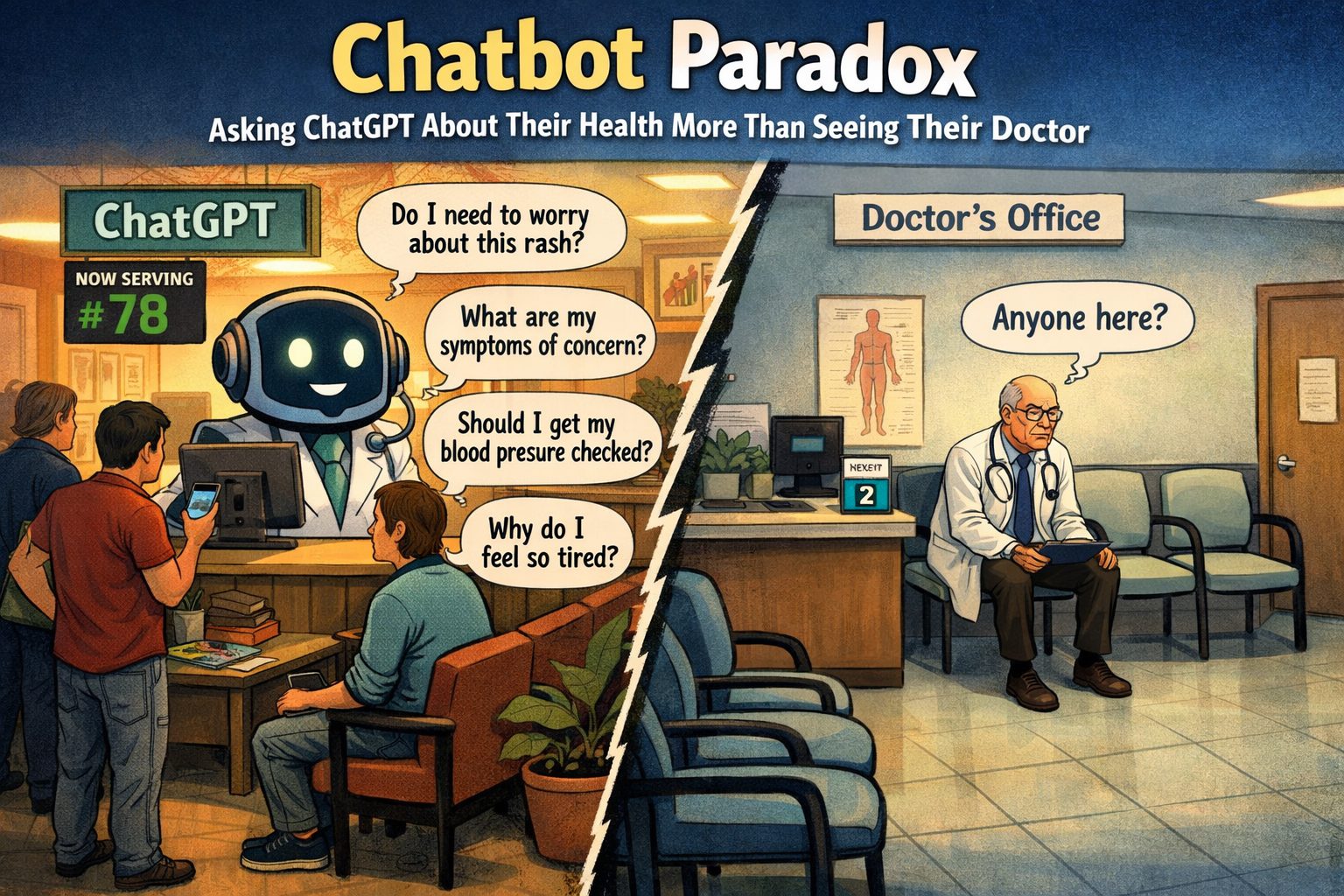
When patients choose AI over their doctor, we’re not facing
a technology problem—we’re facing a human connection
crisis.
Recent reporting reveals that 1 in 6 adults now regularly consult AI chatbots like ChatGPT for
medical information — rising to 1 in 4 among adults under 30. But here’s another thing keeping me up
at night: patients aren’t choosing AI because it is better. They’re choosing it because it’s kinder.
Really?
For example, one patient told researchers: “ChatGPT has all day for me — it never rushes me out of
the chat.”
Let that sink in. We have created a healthcare system where artificial empathy feels more authentic
than rushed physician appointments.
The Real Diagnosis
Patients report long wait times, dismissive interactions, and crushing costs. So they turn to chatbots
that respond instantly, never interrupt, and validate their concerns with phrases like “You’re asking
great questions” and “I’m sorry you’re going through this.”
Meanwhile, research shows patients using chatbots made correct clinical decisions less than 50% of
the time. The technology isn’t the solution — it’s a symptom of a deeper problem.
What This Reveals About Culture
At Norman Regional, we proved that human connection delivers measurable results. Our “Healer
Culture” — where every team member, from EVS technicians to physicians, understood their role in
healing — just earned us NRC Health’s 2025 Excellence in Patient Experience Award for Medium
Hospitals, based on exceptional Net Promoter Scores throughout 2024-2025.
The science backs this up: compassionate interactions reduce patient anxiety, improve outcomes,
and accelerate healing. A 2020 study found that small acts of kindness from healthcare staff — even
non-clinical team members — significantly enhance patients’ psychosocial well-being.
This isn’t soft skills. It’s clinical efficacy wrapped in compassion.
➡ The Path Forward
Technology should augment human connection, not replace it. AI can handle scheduling, data
retrieval, and routine questions — freeing clinicians to do what only humans can: provide empathetic,
nuanced care in moments of vulnerability.
But here’s the hard truth: if we don’t fix our culture first, no amount of technology will save us.
Norman Regional’s recognition proves that when organizations prioritize genuine human connection,
patients notice — and outcomes improve.
The answer isn’t better chatbots. It’s better humanity.
What needs to change in your healthcare experience?
Sources: “Patients turn to ChatGPT as alternative to rushed, costly care” – Becker’s Hospital Review, November 17, 2025,
referencing original reporting from The New York Times
#Leadership #PatientExperience #HealerCulture #CompassionateCare #NRCHealth #Humanity