
Brent Venables Built Something That Can’t Be Bought

By Richie Splitt
Friday night’s College Football Playoff loss to Alabama stung. But as a lifelong Sooner fan, I walked away from that game extremely proud of this team.
Coach Brent Venables built something this season that transcends the final score. A 10-2 regular season. A defense ranked in the nation’s top ten. And a gauntlet called “Red November” that silenced every doubter.
National commentators predicted our Sooners wouldn’t survive November, four consecutive games against SEC powerhouses Tennessee, Alabama, Missouri, and LSU. The consensus was that reality would finally catch up with Oklahoma. Instead, reality caught up with the doubters. The Sooners ran the table, including a 23-21 road win at Alabama’s Bryant-Denny Stadium that fans and media alike called a “culture win.”
After the playoff game, Venables reflected on a senior class that “opted to make a deposit rather than take a withdrawal.” In that one line, he captured everything: in an era of easy exits and quick transactions, these young men chose to invest in each other and in Oklahoma, even when it was hard.
This isn’t just a football story. It’s a leadership lesson for every organization in our state.
What Venables has built at Oklahoma isn’t complicated, but it is rare. He calls football a “developmental sport,” a game where players get better through repetition, strain, and detailed coaching over years, not through talent acquisition alone. He and his staff talk openly about “serving the heart, not the talent,” prioritizing who players become over what they produce on any given Saturday.
The results speak for themselves. In an era where NIL deals and the transfer portal give players unprecedented options — and OU has used both strategically — Venables built something that makes core players choose to stay. While other programs churn through rosters annually, Oklahoma retained its foundation through the turbulent transition to the SEC. While other defenses rely on one or two stars, the Sooners rotated players in waves, building what they call the “Dog Pound,” a collective identity where depth matters more than individual glory. While other coaches promise exposure and quick paths to the NFL, Venables recruits players who want to be developed, challenged, and held accountable.
It’s a culture built on truth-telling, transparency, and hard coaching paired with genuine care. Players aren’t staying because they lack options. They’re staying because they’ve bought into something bigger than a transaction.
Sound familiar? It should.
Healthcare faces its own version of the chaos reshaping college football. Policy uncertainty looms with potential Medicaid cuts and regulatory overhauls. Payer strategies increasingly pit providers against patients, turning the exam room into a battleground over prior authorizations and denials. Workforce burnout has reached crisis levels. And every week brings another headline about closures, mergers, or health systems cutting services to survive.
For the past year, I’ve been writing a book about what happens when organizations commit to this kind of intentional culture-building. The Healer Revolution, launching in May, explores how the same principles transforming Oklahoma football are essential for high-performing health systems — and any organization facing this kind of turbulence.
The parallels are striking. What Venables calls a “developmental sport,” healthcare leaders might call a “developmental profession,” where clinicians and caregivers grow through coaching, mentorship, and years of practice, not just credentialing. What Venables’ SOUL Mission does for players — embedding mentors in their daily lives, holding them accountable for character as much as performance — is what the best health systems do for their people: treat whole-person development as infrastructure, not a side project.
And that “tough-mindedness” Venables talks about? The comfort when things get hard, the refusal to panic when you take a punch? That’s exactly what healthcare teams need to sustain quality and safety through staffing crises, regulatory pressure, and rising patient acuity.
The ripple effects of this kind of culture are profound. For Norman and Oklahoma City, this Sooner season meant tens of millions in economic impact, surging community pride, and a reminder that what we build here matters. For the university, it means stronger recruiting, greater alumni engagement, and a brand that signals excellence.
The same dynamics play out in healthcare. Organizations that invest in culture retain their best people, attract stronger talent, and perform better under pressure. They don’t just survive a crisis — they thrive through it.
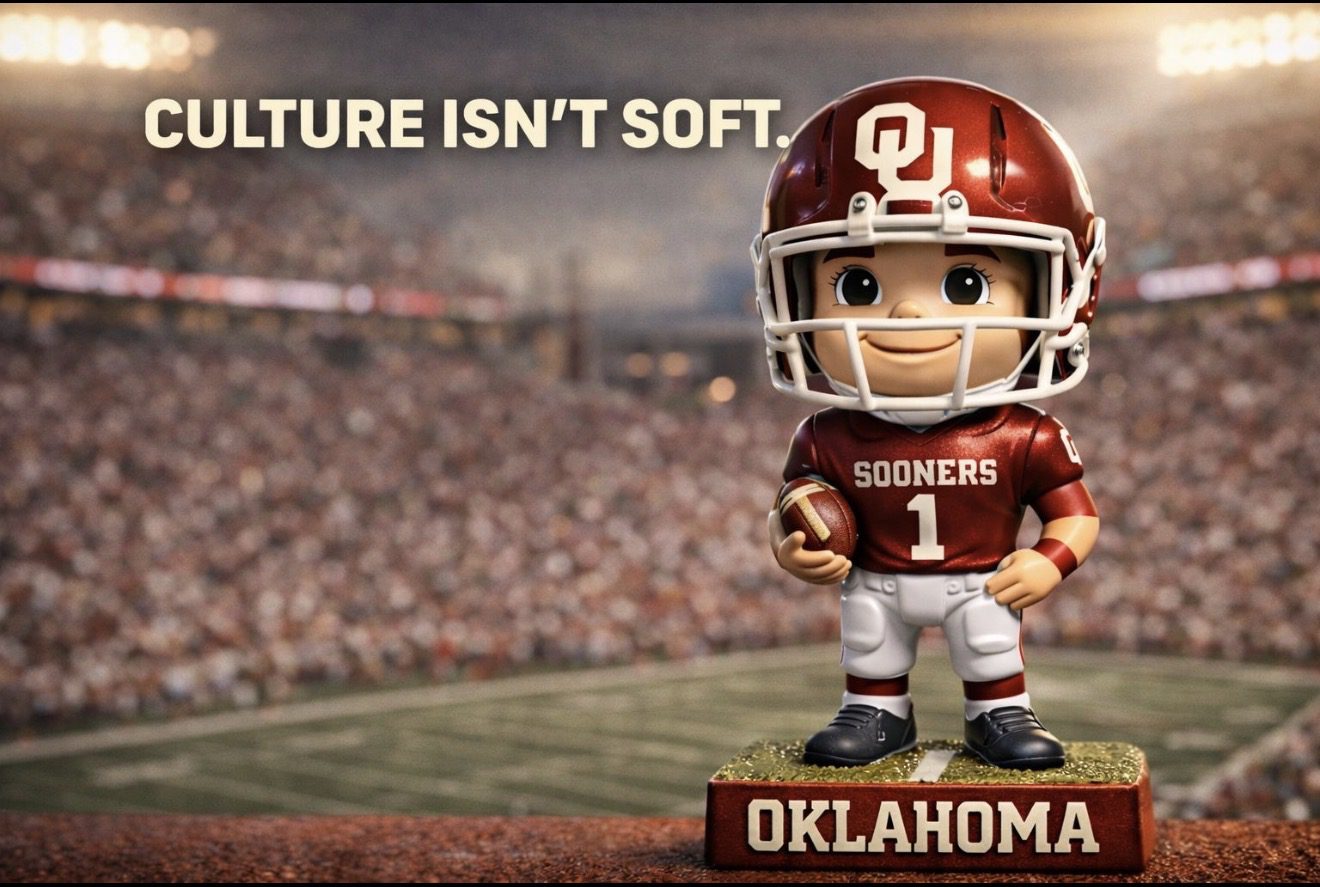
What Coach Venables has proven this season is that culture isn’t soft. It’s the hardest competitive advantage to build and the hardest to replicate. It requires leaders willing to prioritize long-term formation over short-term optics, relationships over transactions, and truth over comfort.
That’s the lesson Norman Regional taught me over eleven years leading through an EF5 tornado, a pandemic, and a multi-million dollar transformation. It’s what I’ve seen Venables build in Norman. And it’s why I believe Oklahoma is positioned to lead — on the field, in our hospitals, and in every organization willing to do the hard work of culture.
Boomer Sooner!