
The Healthcare Clock We’re Not Watching: What America’s Health Crisis Needs Now
A real-time visual reminder might be exactly what we need to drive meaningful change
Watching the White House announce sweeping changes to GLP-1 drug pricing today, I found myself fixated not on the policy details, but on something appearing for the first time on my screen: a real-time “Travel Alert” tracking flight delays and cancellations due to the government shutdown. It was stark. Immediate. Impossible to ignore.
As I flipped between networks, I saw another variation of this same urgency — a count-up clock marking the number of days since the government shutdown began 36 days ago, minute-by-minute updates on unpaid federal workers, ticking upward in real time.
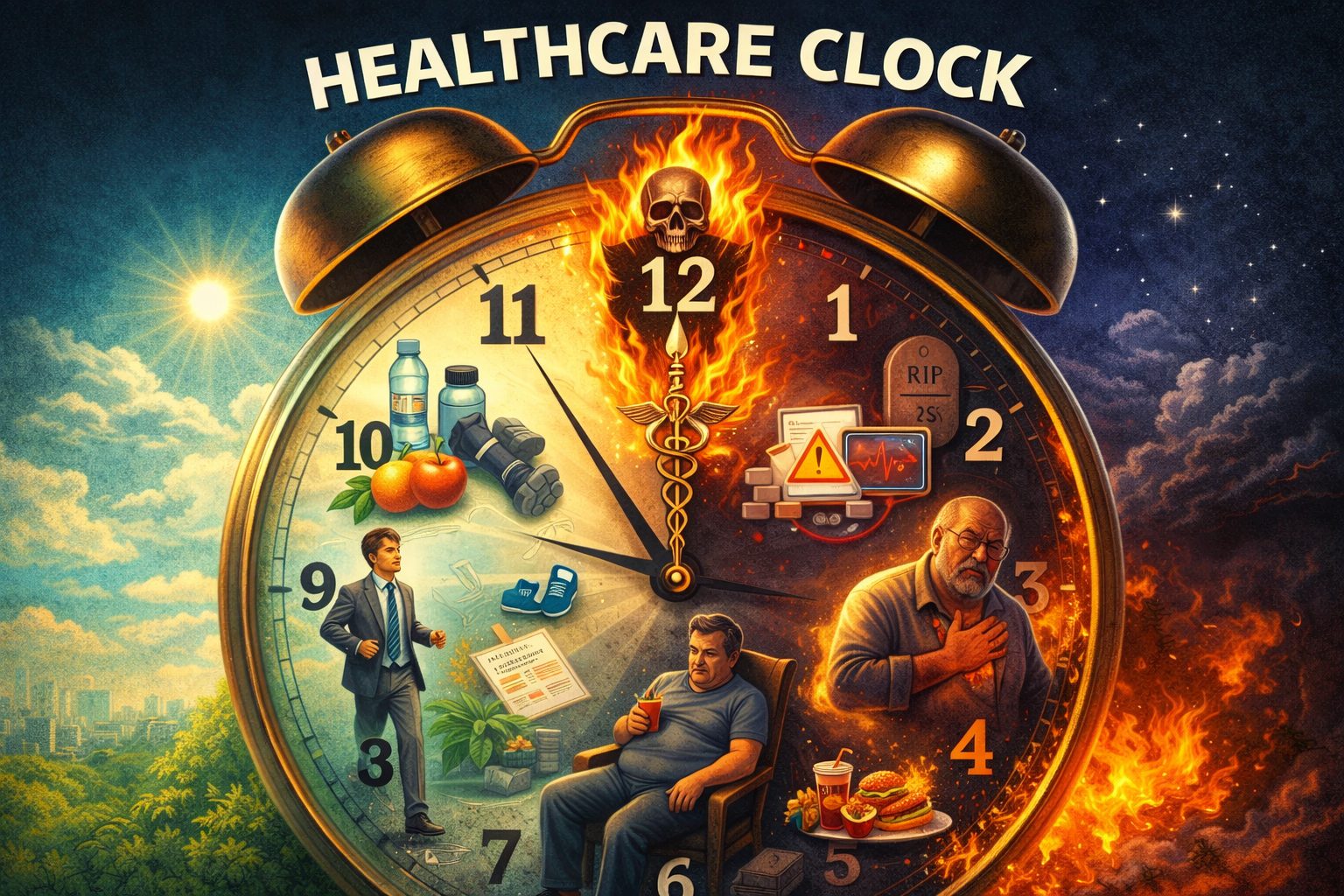
And then a question struck me that I haven’t been able to shake: Where is our Healthcare Clock?
The Power of Making the Invisible Visible
The genius of the Travel Alert and Count-up clock wasn’t just in their information — it was in their immediacy. Every viewer could see, in real time, the tangible impact of policy decisions on their daily lives. Flight cancellations aren’t abstract. They’re your Thanksgiving trip, your business meeting, your ability to get home.
Healthcare crises, by contrast, often remain invisible until they become personal. We know the statistics intellectually: 45,000 Americans die annually due to lack of health insurance. Medical debt is the leading cause of personal bankruptcy. Hospital readmission rates cost billions. But these numbers live in reports, not on our screens during primetime news.
What if they did?
What Would a Healthcare Clock Actually Track?
If I were designing a Healthcare Clock to run alongside policy announcements — whether about drug pricing, insurance reform, or hospital funding — here’s what I think it should display:
Real-Time Impact Metrics:
- Americans currently uninsured or underinsured (updated hourly based on enrollment data)
- Preventable deaths this month due to delayed care, lack of access, or medication non-adherence
- Medical bankruptcy filings today (real-time court data)
- ER wait times across major metro areas (color-coded by severity)
- Days since the last major healthcare policy passage that expanded access or reduced costs
The Human Cost Counter:
- Insulin rationing incidents reported this week
- Families choosing between medication and rent (survey-based estimates)
- Cancer diagnoses are delayed due to deferred screenings
- Mental health crisis calls are waiting for available beds
The System Strain Indicator:
- ICU capacity percentage across major hospital systems
- Healthcare worker burnout index (resignation rates, unfilled positions)
- Average time to specialist appointment by region
- Prescription abandonment rate at pharmacies (due to cost)
Why This Matters Beyond the Visual
Today’s announcement about GLP-1 pricing is genuinely significant. Reducing Wegovy to $149/month and Zepbound to $299/month, with Medicare coverage and a $50 copay cap, will change lives. Millions of Americans who couldn’t afford these medications will now have access to treatments that can dramatically improve health outcomes, reduce chronic diseases, and lower obesity-related complications.
But here is what a “Healthcare Clock” would force us to reckon with: This is one policy addressing one category of drugs for one set of conditions.
While we should celebrate this win — and we should — the clock would still be running on:
- Patients rationing insulin despite the $35 cap, because they can’t afford other diabetes supplies
- Cancer patients delaying chemotherapy due to insurance prior authorization delays
- Rural hospitals closing at a rate of one every three weeks, leaving entire communities without emergency care
- Healthcare workers leaving the profession faster than we can train replacements
The Lesson from Air Traffic Control
The FAA’s decision to reduce flights by 10% wasn’t about punishing travelers — it was about maintaining safety when systems are strained beyond capacity. The visual alert made this trade-off impossible to ignore.
Healthcare makes similar trade-offs every single day, but we do it quietly.
Emergency departments divert ambulances. Elective surgeries get postponed indefinitely. Mental health patients wait months for appointments. Rural residents drive hours for basic care. We’ve normalized these compromises in a way we’d never accept if they showed up as a “Healthcare Alert” banner during our evening news.
What This Means for Healthcare Leaders
As someone who’s spent my career at the bedside, in the back offices, and in the boardroom, I believe visibility drives accountability. When problems remain abstract, they remain unsolved.
Here’s what I propose we consider tracking publicly:
- Access metrics in every policy discussion: When we talk about drug pricing, also show wait times for prescribers. When we discuss insurance coverage, show claim denial rates.
- Real-time system capacity: Hospitals publish ICU capacity during COVID. Why not always? Transparency about strain can drive resource allocation and workforce planning.
- Patient outcome dashboards: Not just clinical metrics, but financial toxicity, care delays, and barriers to access — updated as frequently as we update stock market indices.
- Workforce sustainability indicators: Healthcare cannot function without healthy workers. Burnout, vacancy rates, and retention should be as visible as patient satisfaction scores.
The Call to Action
Today’s GLP-1 pricing announcement is a case study in what happens when political will meets pharmaceutical negotiation. It’s a genuine win worth celebrating. But it’s also a reminder that transformative change requires sustained visibility and pressure.
The clock is ticking. The question is: Are we watching?
Just as unpaid federal workers and stranded travelers need Congress to pass a continuing resolution and end this shutdown today, millions of Americans need healthcare leaders and policymakers to treat access, affordability, and system sustainability with the same urgency. Lives depend on it.
So I’ll ask you: What would you put on your Healthcare Clock?
What metrics would make the invisible visible? What would you want policymakers, health system leaders, and the American public to see every single day as a reminder of the work still ahead?
Because if we can track flight delays and cancellations, as well as minute-by-minute tracking of a government shutdown, I am confident we can find a meaningful way to track the health and well-being of our nation with the same urgency.
About the Author: Richie Splitt is a forward-thinking healthcare leader focused on system transformation, access innovation, and workforce sustainability. He believes better data visibility drives better decisions—and better outcomes for everyone.